
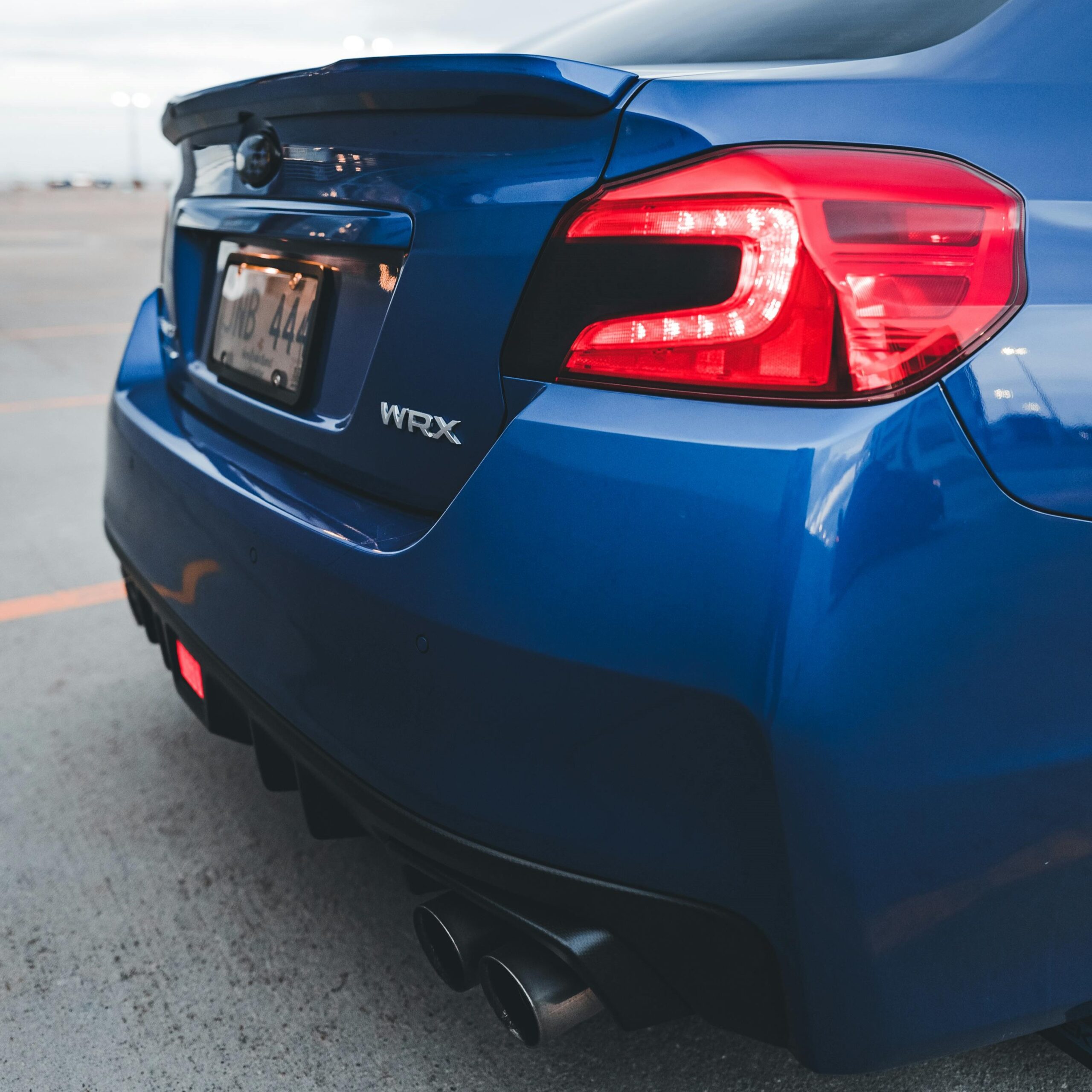
If you own a 2015–2021 Subaru WRX (the VA chassis), you’ve probably heard the horror stories. “Uncle Rodney” coming to knock. Carbon buildup choking your valves. The infamous “DAM drop” on your Accessport.
While the FA20DIT engine is a massive improvement over the older EJ motors in many ways, it has one specific weakness: Direct Injection. Because fuel never washes over the intake valves to clean them, oil vapor from your PCV system bakes onto the valves, causing carbon buildup, rough idling, and power loss.
The solution? You need to stop that oil vapor before it hits the intake.
Enter the great debate: Air Oil Separator (AOS) vs. Catch Can.
In this guide, I’m going to break down exactly how these systems work, why the “cheap” option might cost you an engine, and which one is actually right for your build.
The Root Problem: Why Your WRX Needs Help
To understand why you need to spend $300–$500 on a metal can, you have to understand how the Subaru PCV (Positive Crankcase Ventilation) system works.
The “Blow-By” Effect
Every time your cylinders fire, a tiny amount of combustion gas squeezes past the piston rings and into the crankcase (the bottom of the engine where the oil lives). This is called “blow-by.” On a turbocharged car like the WRX, high boost pressure creates even more blow-by.
This pressure has to go somewhere, or it would blow out your oil seals. The factory PCV system vents this dirty air—filled with unburnt fuel and oil mist—back into your intake manifold to be burned off by the engine.
The Direct Injection Flaw
On older cars (like the 2002–2014 WRX), fuel was sprayed into the intake runners, washing the valves clean. But on your 2015–2021 WRX, the fuel is sprayed directly into the cylinder.
This means nothing cleans the intake valves. When that oily PCV air hits the hot valves, it cooks into a hard carbon sludge. Over time (usually 30k–50k miles), this buildup disrupts airflow, causing misfires and robbing you of horsepower.
Even worse? Oil lowers the octane of your fuel. If your engine sucks in a gulp of oil vapor during a wide-open throttle pull, it effectively turns your 93 octane gas into 87 octane, leading to knock and potential engine failure.
Contender 1: The Oil Catch Can
The Catch Can is the traditional, simple solution. It is essentially a trap placed in the hose between your crankcase and your intake.
How It Works
Think of a Catch Can as a filter. The dirty air leaves the crankcase and enters the can. Inside, the air is forced through baffles or steel wool. The heavy oil and water droplets get trapped in the bottom of the can, while the “clean” air continues on to the intake.
The Pros
- Cost: You can get a decent catch can setup for $150–$250.
- Filtration: Because it doesn’t return anything to the engine, it physically removes the “gunk” (a mix of oil, fuel, and water) from your system entirely.
- Simplicity: It has no moving parts and usually doesn’t require tapping into coolant lines.
The Cons
- Manual Maintenance: You must remember to empty it. If you forget, the can fills up. Once full, that sludge has nowhere to go but straight into your engine, which can cause catastrophic hydrolock or massive carbon ingestion.
- Winter Freezing: In cold climates (like here in NC during January), the water vapor inside the can freeze, blocking the PCV lines and causing crankcase pressure to spike.
- No Return: You are permanently removing oil from your engine. You will need to top off your oil levels more frequently.
Contender 2: The Air Oil Separator (AOS)
The Air Oil Separator is the “evolution” of the catch can. It is designed to be a permanent, maintenance-free part of the engine ecosystem.
How It Works
An AOS (like the ones from IAG Performance or Cobb) uses centrifugal force and complex baffling to separate the oil from the air.
But here is the key difference: It drains the oil back into the engine.
The AOS mounts high in the engine bay. The separated oil flows down a return line and back into the crankcase (usually via the turbo oil drain or a block port). The “clean” air is vented to the intake.
Most high-quality AOS units also route engine coolant through the body of the separator. This keeps the unit hot, preventing water vapor from condensing and mixing with the oil. This prevents the dreaded “yellow sludge” (oil + water) from draining back into your oil pan.
The Pros
- Maintenance Free: Set it and forget it. You never have to drain a can.
- Engine Safety: You never have to worry about the can overflowing.
- Oil Level Stability: Because it recycles the oil, you consume less oil between changes.
- All-Weather Capable: The coolant heating prevents freezing in winter.
The Cons
- Price: A quality AOS kit runs $450–$550.
- Installation Difficulty: It is much harder to install. You have to route coolant lines, drain lines, and vent lines. It’s a 3–4 hour job for a beginner.
The Verdict: Which One Do You Need?
After working on dozens of Subarus, here is my honest take. The decision usually comes down to two factors: Budget and Laziness.
Scenario A: The “Set and Forget” Daily Driver
Winner: Air Oil Separator (AOS)
If this is your daily driver, get an AOS. I cannot stress this enough. The reality of car ownership is that we get lazy. You might be diligent about emptying a catch can for the first month, but will you remember to check it at 11 PM on a rainy Tuesday in February?
If you forget to empty a catch can just once, you risk destroying your engine. The IAG AOS protects you from your own forgetfulness. It also keeps the PCV system functioning exactly like stock, but better.
Recommended Products:
- IAG Performance V3 Street Series AOS: This is the gold standard. It’s widely considered the best unit on the market for the FA20.
- Cobb Tuning AOS: Very similar design to IAG (actually made in partnership with them) but with Cobb branding to match your other parts.
Scenario B: The “Budget” or “Show Car” Build
Winner: Catch Can
If you are building a show car and want a clean engine bay without hoses running everywhere, catch cans look nicer. They are also lighter, which matters if you are shaving ounces for a dedicated time-attack car.
However, if you buy a catch can, buy a name brand (like Radium Engineering or Mishimoto). Do not buy a $30 eBay can. The cheap ones are empty inside—they have no baffles, so the air just flows right through them without trapping any oil.
Installation Reality Check
Before you buy, you need to know what you are getting into.
Installing a Catch Can:
- Difficulty: 2/10
- Time: 30–60 minutes.
- Tools: Basic socket set, pliers.
- Process: Mount the can to the strut tower, unplug the PCV hose, and route two new hoses. Done.
Installing an AOS:
- Difficulty: 6/10
- Time: 3–5 hours.
- Tools: Sockets, hose cutters, picks, and patience.
- Process: You will be removing the intercooler (TMIC), wrestling with stuck hoses on the block, and possibly modifying the turbo oil drain hose. It is tight work. If you aren’t comfortable removing your intercooler, pay a shop to do this.
Frequently Asked Questions (FAQ)
1. Will an AOS void my warranty? Technically, any modification can be used to deny a warranty claim if the dealer proves it caused the failure. However, an AOS generally improves reliability. Many friendly service advisors look the other way because they know it saves the engine. However, you should always consult your local dealer or assume the risk.
2. Do I need a tune for an AOS? No. An AOS or Catch Can does not change the air-fuel ratio. You do not need an Accessport tune to run one. (Note: This is different from an Intake, which absolutely requires a tune on a WRX).
3. Street Series vs. Competition Series AOS? If you look at IAG’s catalog, you’ll see “Street” and “Competition.”
- Street: Vents to the intake. Keeps the car emissions compliant. No smell. Get this one.
- Competition: Vents to the atmosphere (ground). Your car will smell like oil fumes at every stoplight. Only gets this if you are building a 600+ HP race car.
Final Thoughts
For the 2015–2021 WRX, carbon buildup is not a matter of “if,” but “when.”
While a Catch Can is better than nothing, the Air Oil Separator is the superior engineering solution. It solves the problem without adding a maintenance chore to your life. In my experience, the peace of mind knowing that my octane isn’t being lowered by oil blow-by—and that I don’t have to drain a can of sludge—is worth the extra $200.
Protect your FA20. It’s cheaper to buy an AOS now than a new short block later.
Disclaimer: I am an enthusiast, not a certified Subaru technician. Always follow the installation instructions provided by the manufacturer.