
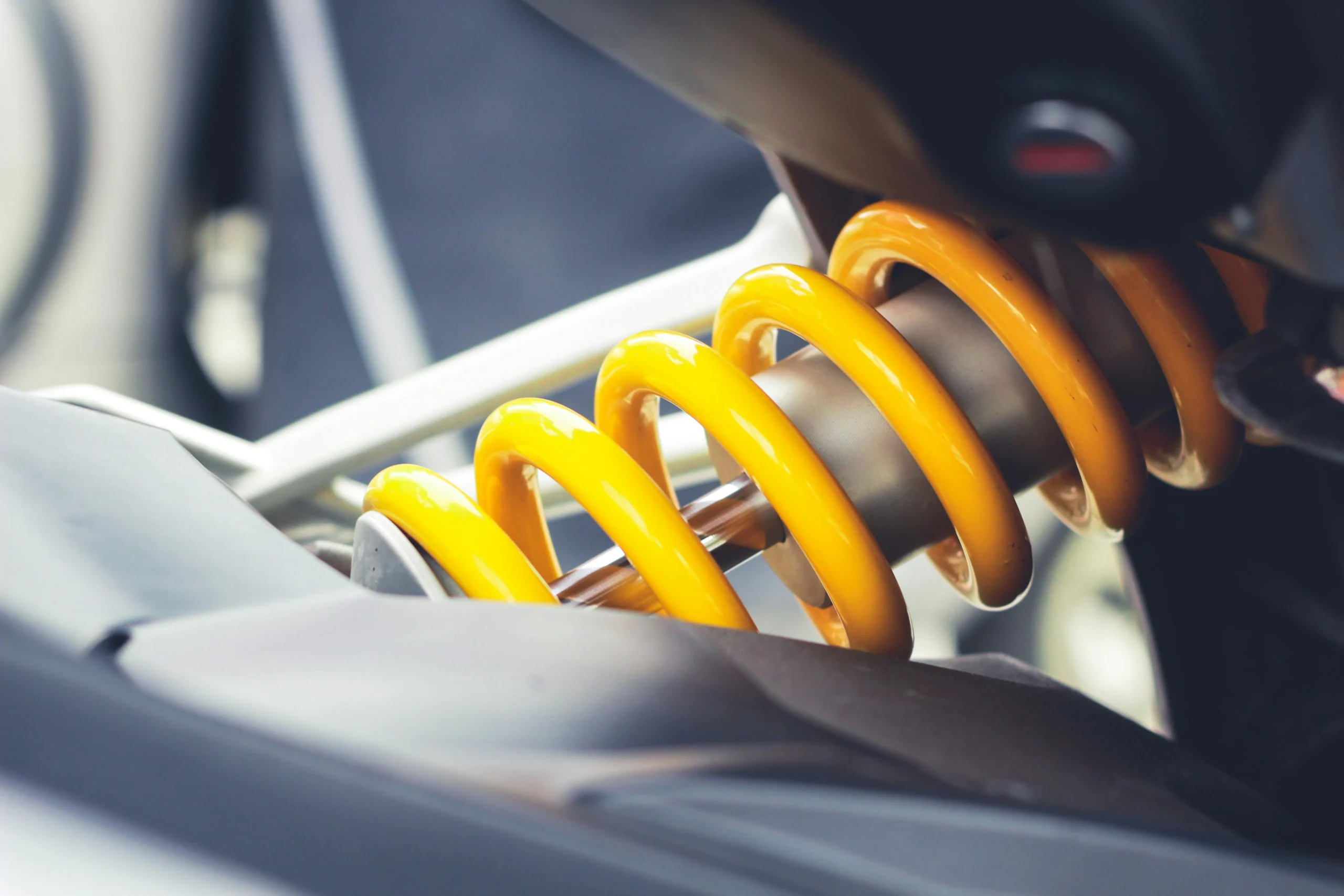
If you own a 2015-2021 Subaru WRX (the VA chassis), you likely noticed one thing the moment you drove it off the lot: the wheel gap. While the VA WRX is a formidable machine with its FA20DIT engine and symmetrical AWD, the stock stance often leaves enthusiasts wanting more. It sits a little high, arguably for rally heritage reasons, but for the street, it screams for a drop.
This brings us to the oldest debate in the tuner manual: Lowering Springs vs. Coilovers.
For many, the decision comes down to budget versus performance. But there is a third, often overlooked factor that actually matters most for a daily driver: Ride Quality. Is the sophisticated damping of a coilover system really worth spending double (or triple) the price of a set of springs?
In this guide, we are going deep into the suspension geometry of the VA WRX to help you decide where to put your money. Plus, we’ll show you how using a dedicated auto part picker can help you squeeze that suspension upgrade into your budget.
The VA Chassis: Understanding Your Suspension
Before we start throwing parts at the car, we have to understand what we are working with. The 2015-2021 WRX utilizes a MacPherson strut setup in the front and a double-wishbone (multi-link) setup in the rear.
Why does this matter? Because the MacPherson strut front end relies heavily on the strut assembly to dictate suspension geometry, specifically camber. When you lower a MacPherson strut car, you naturally gain some negative camber, but you also change the roll center. If you go too low without correction, you ruin the handling characteristics that make the WRX special.
Both springs and coilovers will lower the center of gravity (CG), reducing body roll and improving transition response. However, how they achieve this drop drastically changes how the car absorbs bumps on your morning commute.
Option 1: Lowering Springs – The “OEM+” Approach
Lowering springs are designed to replace the stock factory springs while utilizing the factory struts (shocks). They are shorter and usually stiffer than the stock springs to prevent the car from bottoming out at its new, lower height.
The Pros of Lowering Springs
- Cost-Effectiveness: This is the primary driver for most enthusiasts. A quality set of springs (like those from Eibach, Swift, or RCE) typically costs between $250 and $400.
- Simplicity: You don’t need to worry about setting preload, adjusting ride height collars, or dialing in damping knobs. It is a “set it and forget it” modification.
- NVH (Noise, Vibration, Harshness): Because you generally retain the factory top hats (mounts) which have rubber bushings, lowering springs tend to keep road noise similar to stock levels.
The Cons: The “Bouncy” Reality
The biggest downside to lowering springs on the 2015-2021 Subaru WRX is the potential mismatch with factory struts. Your stock struts are valved to control the rebound energy of the stock springs. When you install a lowering spring, two things happen:
- Reduced Travel: The strut is now permanently compressed a specific amount, leaving less travel to absorb large bumps.
- Overwhelmed Valving: Lowering springs have a higher spring rate (stiffness). If the stock strut valving isn’t strong enough to control that stiffer spring, the car will oscillate after a bump. This is the infamous “pogo stick” effect or “bouncy” ride.
The Verdict on Springs: If you are only looking for a modest drop (0.8″ to 1.0″) and want to retain a comfortable, close-to-factory ride, springs like the RCE Yellows or Swift Spec-R are fantastic. However, if you crave a “slammed” look, lowering springs will likely destroy your stock struts within 10-20,000 miles, leading to a terrible ride quality.
Option 2: Coilovers – The Full Replacement
Coilovers replace the entire strut and spring assembly with a matched unit. The name is short for “coil spring over strut.”
The Pros of Coilovers
- Adjustability: This is the game-changer. You can dial in the exact ride height you want. Want to close the wheel gap by exactly 1.5 inches? You can. Need to raise it up for winter? You can do that too.
- Matched Damping: A coilover damper is valved specifically for the spring paired with it. This eliminates the “bouncy” feeling (provided you buy a quality brand).
- Camber Plates: Many coilover kits for the VA WRX come with adjustable front camber plates. This is essential for fitting aggressive wheel setups or dialing in an alignment for track days.
- Damping Adjustment: Most mid-range coilovers feature a knob to adjust compression and rebound. You can set it to “Soft” for the daily commute and “Hard” for the canyon run.
The Cons: Maintenance and Complexity
Coilovers require more attention. The threaded bodies can seize if not cleaned (especially in salt belt states), and the spherical bearings used in camber plates can transmit more road noise than the rubber OEM mounts.
The Ride Quality Showdown: Is it Worth the Extra Cost?
This is the $1,000 question. A set of lowering springs might cost $300, while a reputable set of coilovers (like Fortune Auto, BC Racing, or KW) starts around $1,100 and goes up to $2,500+.
Is the ride quality $800+ better?
In the context of the 2015-2021 Subaru WRX, the answer is often YES, but with a caveat.
The “Crashy” vs. “Firm” Distinction
A generic, cheap coilover ($500 range) will often ride worse than stock springs. They typically use poor valving that feels “crashy” over potholes. Avoid these.
However, a quality mid-tier coilover provides a ride quality that is firm but controlled.
- With Lowering Springs: When you hit a mid-corner bump, the car might unsettle or bounce because the stock strut can’t control the spring energy fast enough. This feels unpredictable.
- With Quality Coilovers: When you hit that same bump, you feel it—it’s stiff—but the suspension compresses and rebounds once. The chassis settles immediately. This composure inspires confidence.
For a daily driver, the ability to fine-tune the damping (softening the ride for rough roads) is a luxury that justifies the price tag. Furthermore, coilovers typically offer more suspension travel at a lowered height than lowering springs on stock struts, because the coilover body is physically shorter, allowing the shock to stroke fully even when the car is low.
The Financials: Planning Your Build with Price Matching
Let’s be real: car parts are expensive. Whether you decide on the budget-friendly springs or the premium coilovers, you shouldn’t pay full retail if you don’t have to.
This is where the utility of a dedicated auto part picker comes into play.
Most enthusiasts have 15 tabs open, jumping between subispeed, RallySport Direct, Import Image Racing, and Amazon, trying to calculate shipping and find the lowest base price. It’s exhausting.
Why Price Comparison Matters for Suspension
Suspension components are “high-ticket” items. A 5% difference in price on a $1,800 set of KW V3 coilovers is $90—that’s a tank of gas and a nice lunch.
Generic car parts price matching websites often fail the enthusiast because they clutter results with generic replacement parts (like brake pads for a Camry) when you are searching for specific aftermarket performance parts.
CarPartsPicker.com is designed to solve this specific headache. By aggregating data specifically for enthusiast platforms like the 2015-2021 Subaru WRX, you can:
- Compare Availability: See who actually has the coilovers in stock (essential during supply chain shortages).
- Track Price History: Know if that “sale” is actually a deal.
- Bundle and Save: Sometimes buying the coilovers and the rear lower control arms (which you will likely need for alignment) from different vendors saves you hundreds.
Summary: Which Should You Buy?
To wrap up, here is the cheat sheet for your decision:
Choose Lowering Springs IF:
- You are on a strict budget (under $500 total).
- You only want a mild drop (less than 1 inch).
- You live in an area with very smooth roads.
- You do not plan on tracking the car competitively.
- Recommended Brands: RCE Yellows, Swift Spec-R.
Choose Coilovers IF:
- You want to eliminate the wheel gap completely.
- You prioritize suspension travel and chassis composure over “softness.”
- You want the ability to adjust stiffness for different driving scenarios.
- You are running an aggressive wheel setup that requires camber adjustment.
- Recommended Brands: Fortune Auto 500, Cygnus Performance, Ohlins Road & Track.
Your WRX deserves to handle as good as it looks. Whether you choose the static life of springs or the adjustability of coilovers, make sure you do your research and use the right tools to get the best price for your build.
Ready to start your suspension upgrade? Search for your specific WRX parts on the CarPartsPicker homepage today to see current pricing across all major vendors.